Organizational structure
Assign ownership to people, departments, projects and application identities.
Connect your chosen public-cloud and private models, with centralized service catalogs, access permissions and usage attribution.
Applications and digital workers share one entry point; departments access resources by permission.
Include existing enterprise model services and permitted invocation methods.
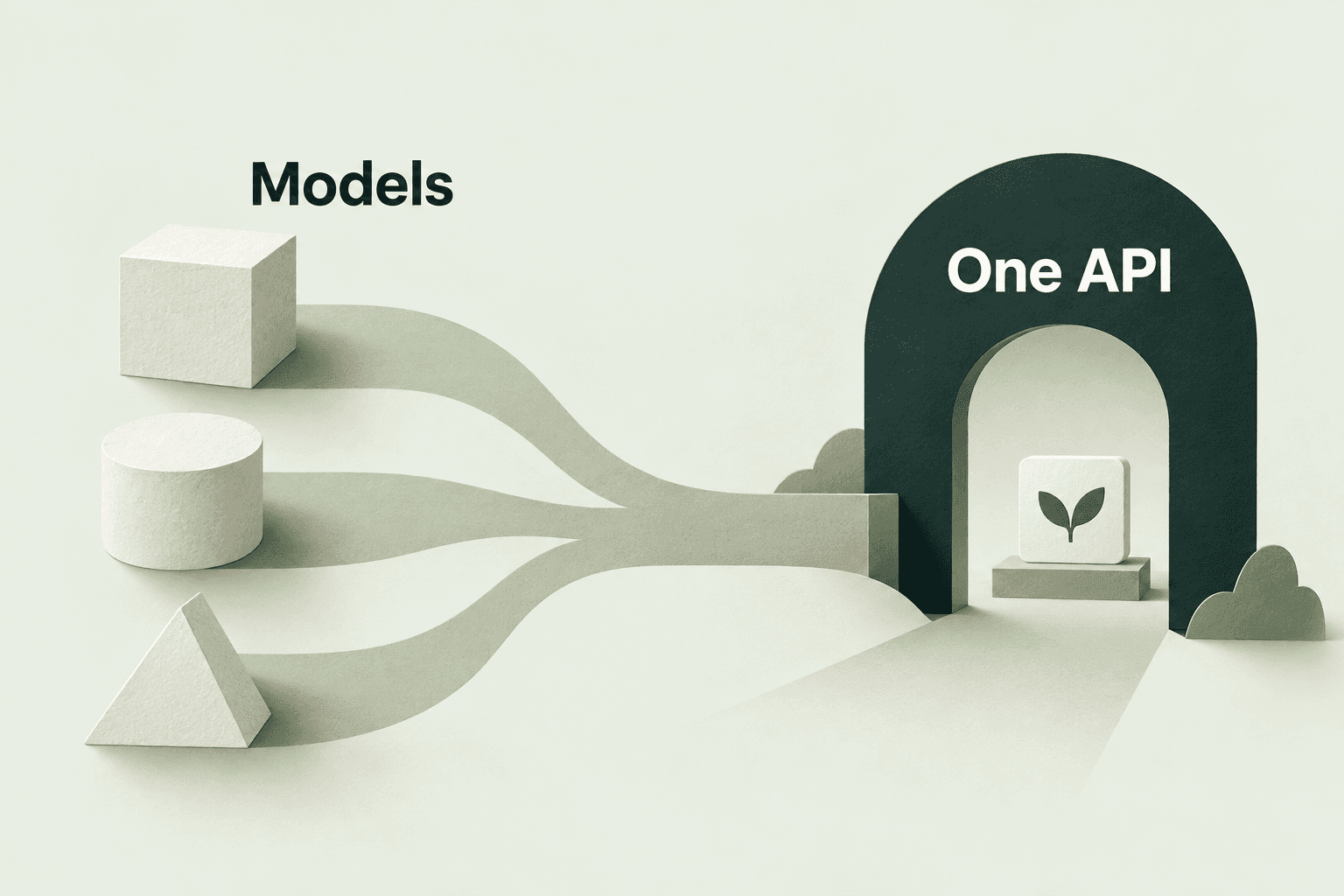
Manage identities, model permissions and quotas throughout their lifecycle to reduce gaps in scattered configurations.
Assign ownership to people, departments, projects and application identities.
Restrict accessible models and purposes according to the supported permission model.
Create, disable, rotate and expire keys; demonstrations use masked examples only.
Quotas and rate limits protect resources; hard-limit support depends on the version.
Attribute model usage to business owners, support budget monitoring and alerts, and enable internal cost allocation.
Link usage records to explicit identities and projects; list unattributed calls separately.
Set budget scopes and alert thresholds; distinguish supported notifications, throttling and blocking.
Calculate estimated or settled costs using actual billing rules, with clear definitions and update times.
Report by organization; consumption does not directly represent business returns.
Give developers a clear service catalog and compatibility scope, with access records that explain results.
Choose an allowed model, obtain an application identity and confirm interface capabilities.
Application → enterprise model entry point → permitted model service.
Link request IDs, time, models and status; default illustrations do not reveal full context.
Access, routing, security and testing have distinct responsibilities, so you can choose the right combination.
Select model paths by task difficulty and enterprise policy.
Check data and tool-execution boundaries.
Provide evidence for model testing and admission.
Analyze effectiveness and efficiency when task-outcome data is available.
Inventory models, identities and protocols, confirm compatibility and migrate in stages.
Existing model sources, interface types, organizational ownership and usage scenarios.
Basic requests, streaming, tool calls, error handling and usage records.
Define cutover scope, rollback procedures and operational ownership.