Enterprise knowledge
Manage policies, workflows, cases and materials by access scope, with traceable sources in answers.
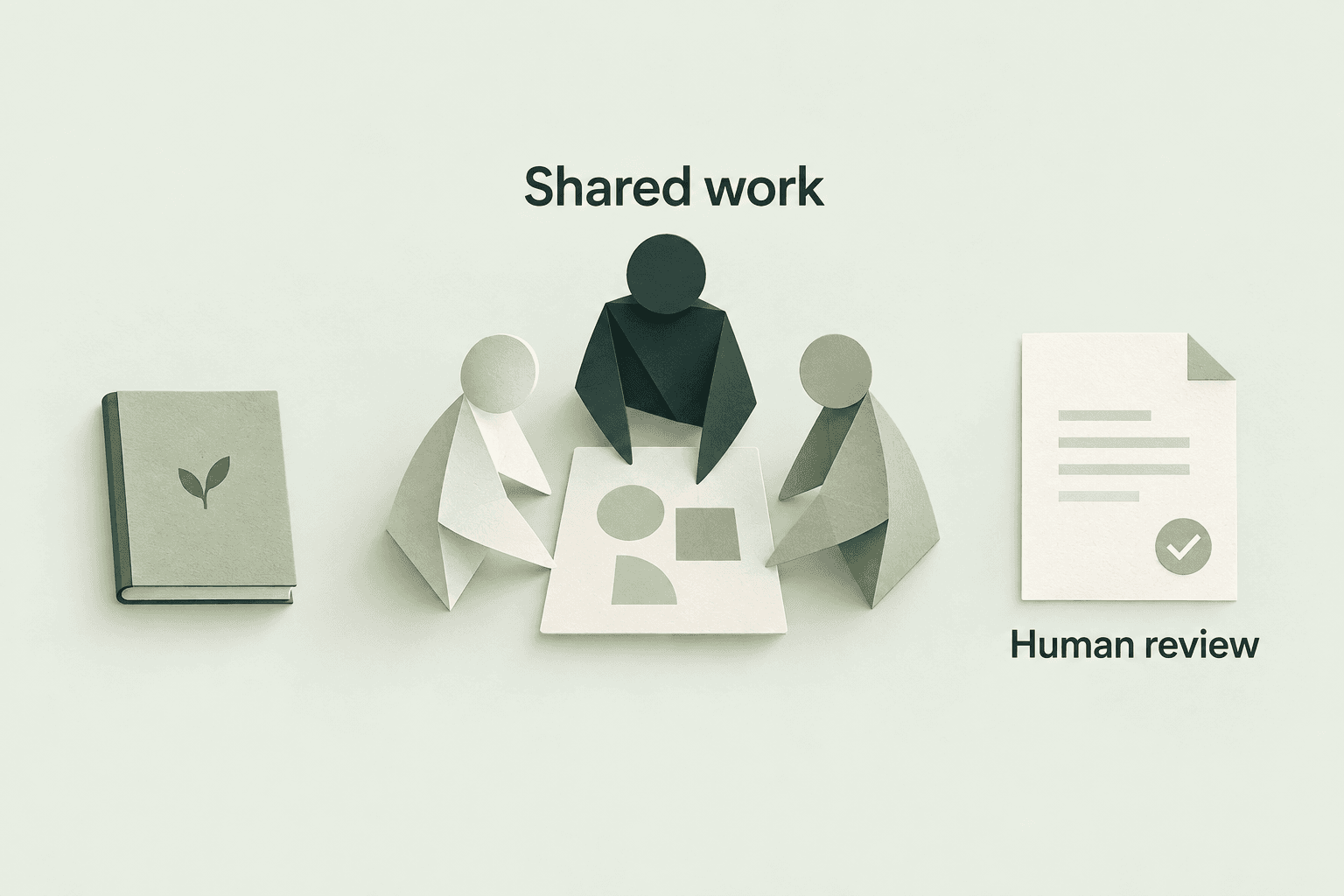
X Worker brings roles, knowledge, skills and workflows into a digital team that collaborates on business tasks, with human review at critical steps.
Unify organizational identity, knowledge, tools and execution records.
Configure roles, responsibilities and collaboration for different jobs.
Work together from discovery and validation through launch and operations to support real business use.
Organize documents, decision rules and exception-handling experience as context for digital workers, so business expertise can keep growing.
Manage policies, workflows, cases and materials by access scope, with traceable sources in answers.
Work with business experts to capture decision criteria, operating steps and exceptions.
Agree on terminology, data definitions, collaboration rules and output templates.
Document owners manage versions and update knowledge and skills using task feedback.
Use explicit triggers, inputs, outputs and exception paths to connect models, knowledge and enterprise systems to tasks.
Manual, scheduled or event-driven triggers, as supported by the delivered version.
Connect authorized business tools and knowledge sources through APIs or MCP.
Define steps, conditions, outputs and handoffs when information is insufficient.
List only verified integrations, with read and write permissions explained separately.
Digital workers can propose an action; explicit access and approval rules determine whether it runs.
Provide the necessary materials within organizational, role and task boundaries.
Restrict the tools, parameters and target systems that may be used.
Route sensitive actions to human approval at integrated execution endpoints.
Isolate credential configuration and record tool calls and approvals for traceability.
One platform supports knowledge, skills and tasks across departments. Start by validating a clearly scoped scenario.
Use contracts and company policies; clause and risk specialists produce comparisons and open questions for legal review.
Use industry materials and research questions; research and risk roles deliver sources, analysis and items to verify.
Search policies within employee permissions, provide sourced answers and return unresolved questions to document owners.
Use technical manuals and requirements; organizing, analysis and validation roles produce drafts and a missing-information list.
Assess agreed tasks against quality standards, then refine knowledge, models and workflows using feedback and runtime data.
Record successful, failed and human-assisted tasks against business acceptance criteria.
Track information accuracy, elapsed time and human review effort.
Include failures and retries across the same task set, then analyze the cost of successful delivery.
Agent Eval provides evidence and recommendations; changes are reviewed, applied and retested.
Choose private, hybrid or cloud arrangements, with clear locations and responsibilities for knowledge, logs, model calls and operations.
Private deployment runs in your environment; hybrid selectively calls external models; cloud access is configured in an agreed environment.
API Platform provides unified model access; Route Engine selects paths by task difficulty and policy.
Route Fence controls data and execution boundaries; Route Trust provides evidence about resource quality.
Agent Eval connects runtime data with business outcomes to support improvement.
Map scenarios, capture skills and validate a PoC together, then plan integration, training and ongoing operations.
A specific task, usable sample materials, desired outputs and a business owner.
A demo explains how it works; a scenario assessment defines what to validate.